Overview
An offset smoker is simple in principle: a fire burns in a separate box, and the heat and smoke travel through a large cook chamber before leaving through a stack. Doing it at this scale, with a 1000-gallon cook chamber made from repurposed propane tanks, turned a backyard build into a real fabrication and engineering project.
I managed the whole thing from design through sale: the geometry, the cutting and welding, the insulation, and the budget.
The fit-up problem
The hardest joint on the smoker is where the firebox meets the cook chamber. Both are curved, and the cookchamber wasn't a simple sphere. Where two curved surfaces meet, the joint is a three-dimensional curve. Guess it and you get gaps to fill with weld, which is ugly, slow, and weak.
Pipe fitters handle two intersecting cylinders with standard coping templates. Those templates assume both parts are cylinders, so they didn't apply here. I needed the actual intersection curve of two different surfaces.
The math
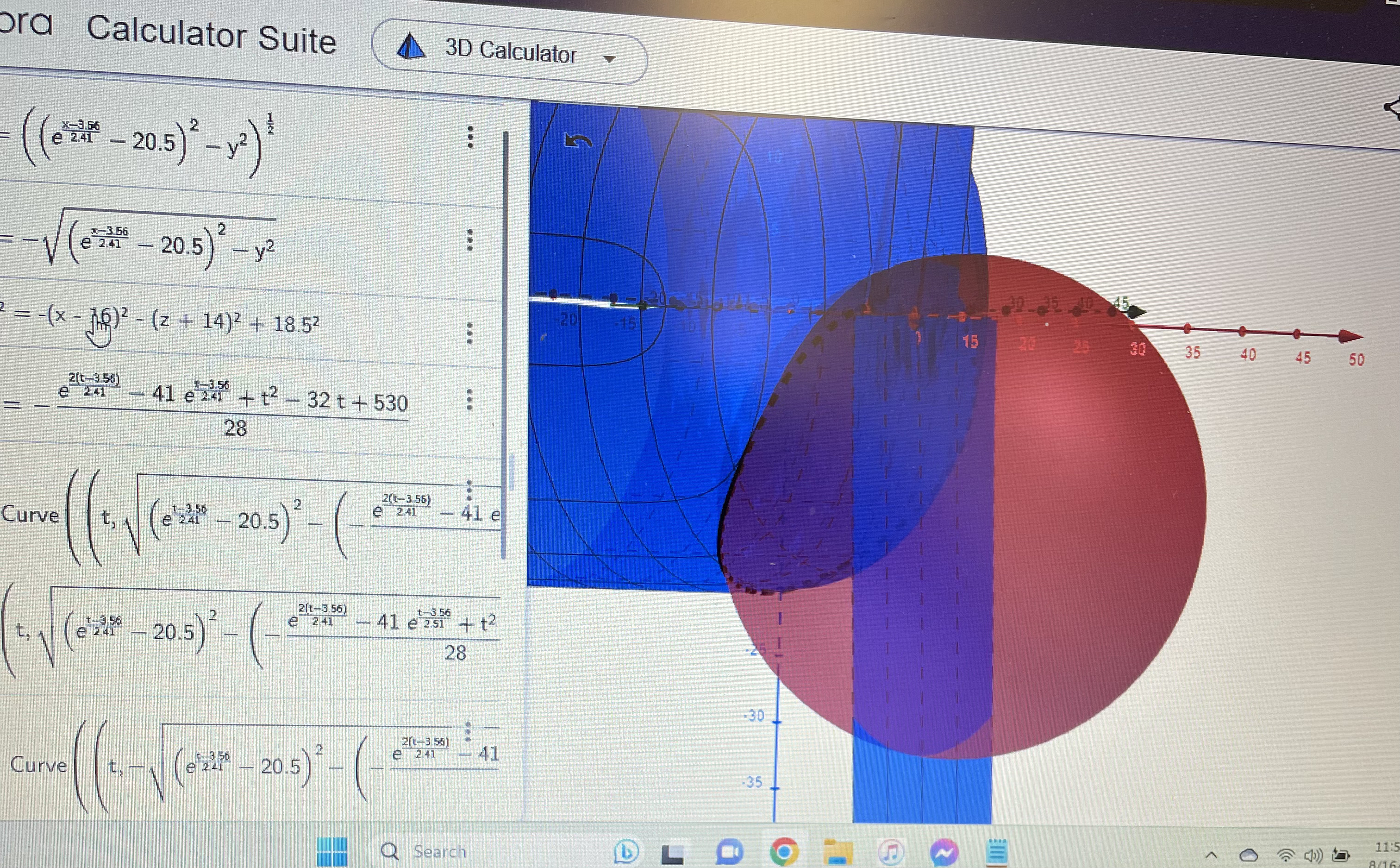
I modeled the cook chamber as a cylinder and the firebox as a custom parametric surface, since its cross-section had no standard shape. The intersection is the set of points that lie on both surfaces. Walking around the firebox's cross-section, each point on its outline pins down where the firebox wall lands, and the chamber's cylinder equation then gives exactly where it meets the curved shell.
A 3D curve isn't something you can trace onto steel directly, so the last step was unrolling it. On the cylinder, a point is described by its position along the axis and its arc length around the circumference, s = R·θ. Plotting the curve in those two coordinates gives a flat template, which wraps onto the tank and shows exactly where to cut.
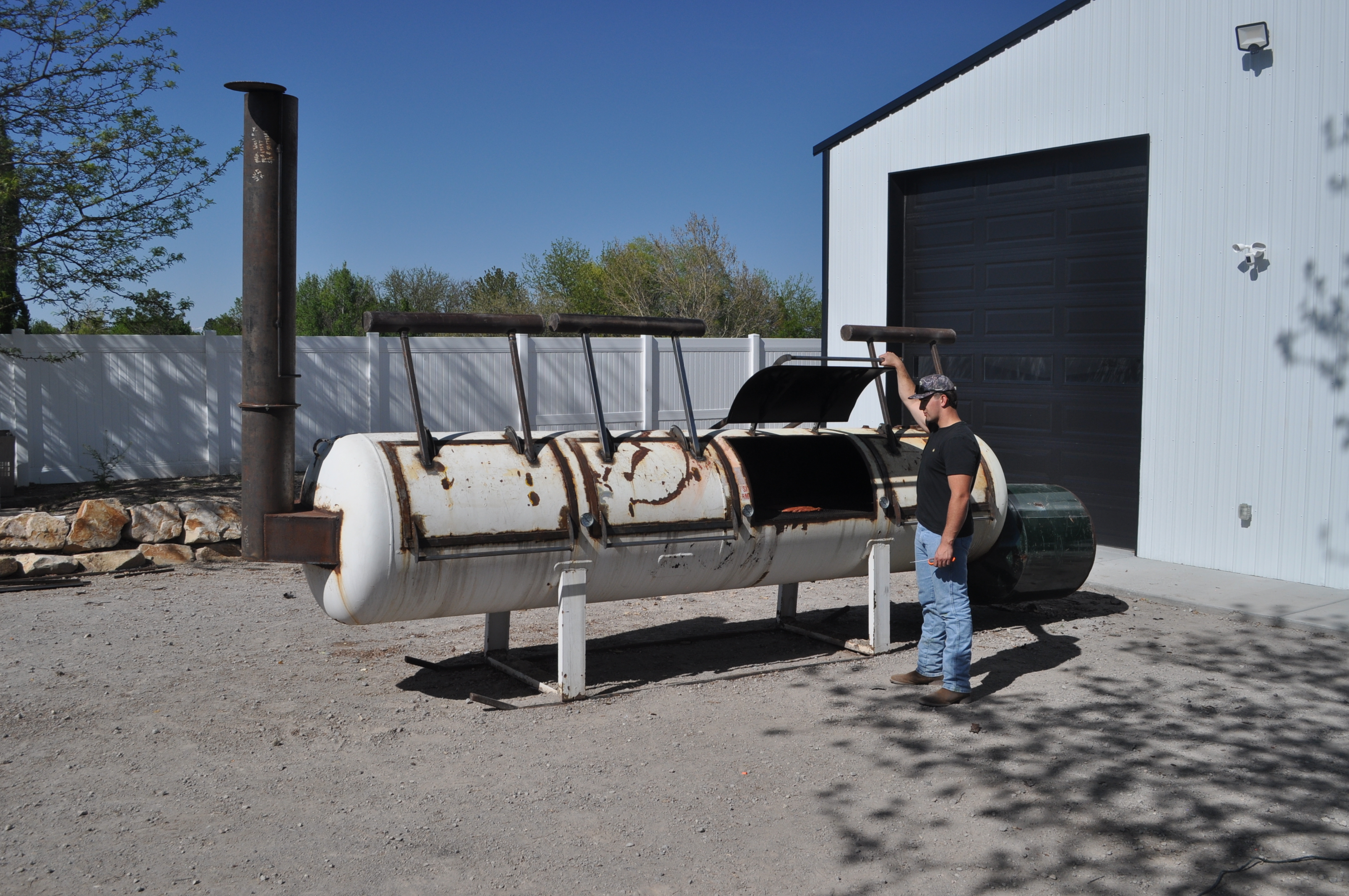
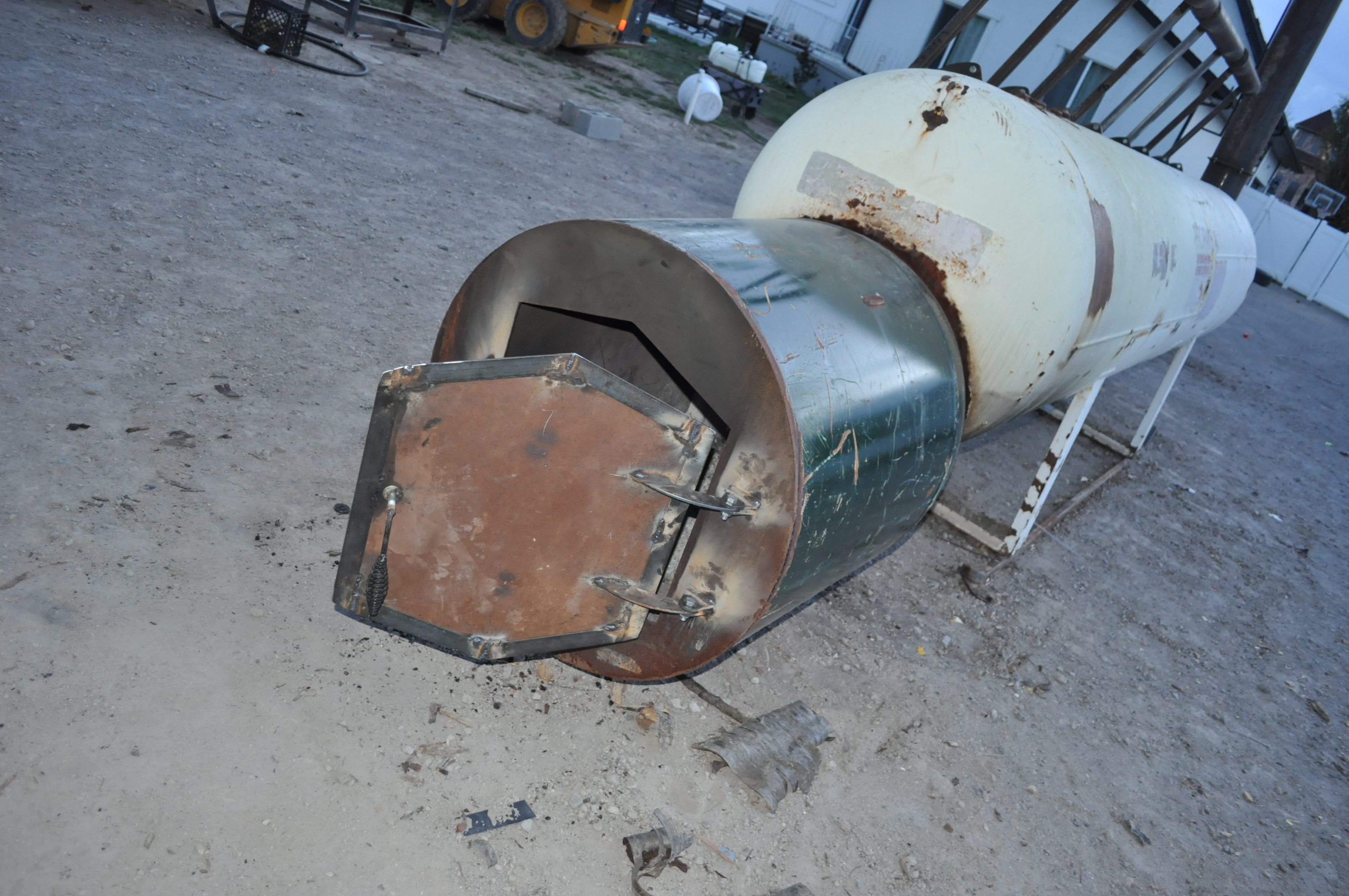
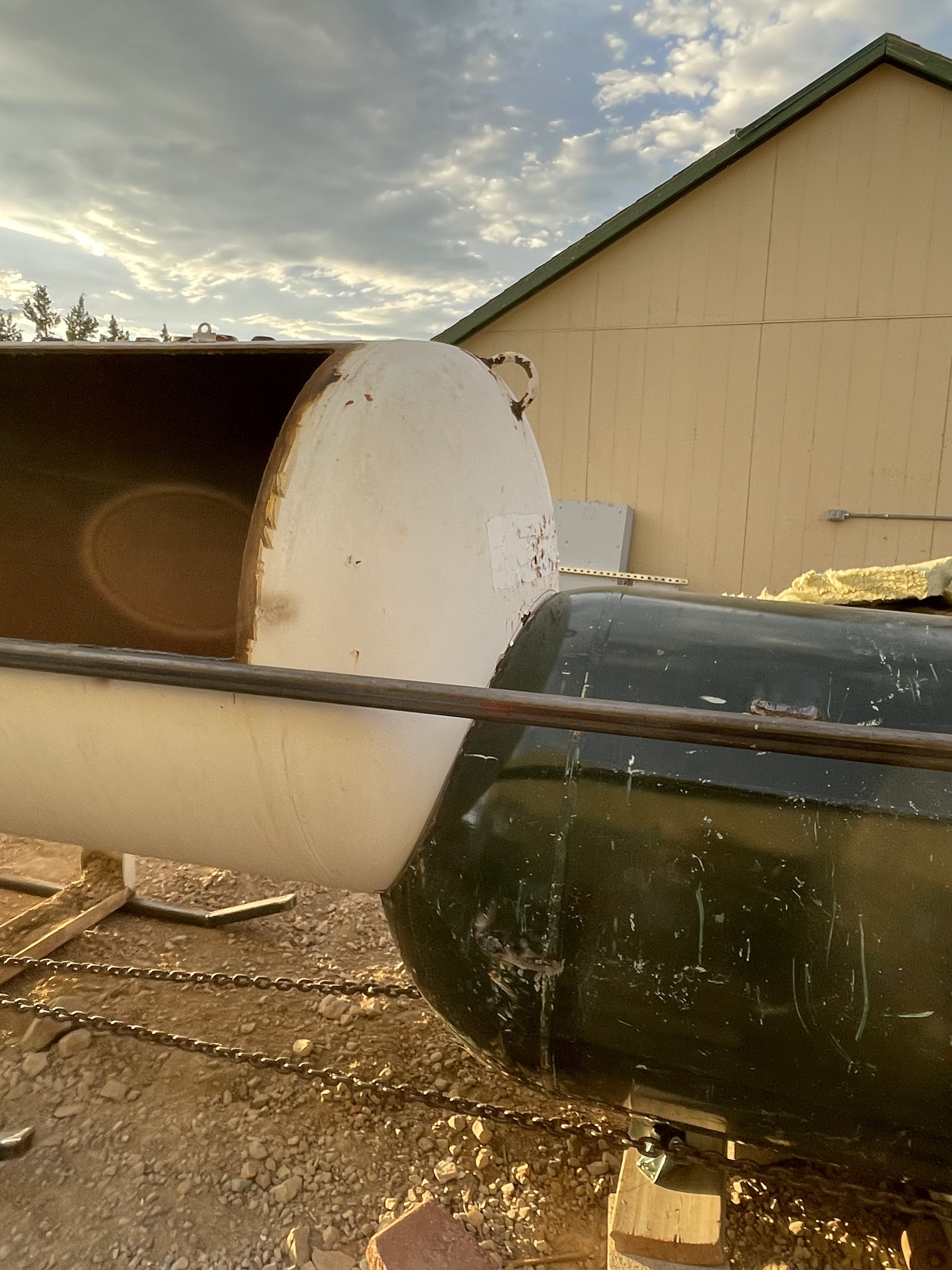
The torch cut followed the computed line, and the parts mated almost perfectly on the first fit-up, with very little grinding.
Fabrication
With the template in hand, I transferred the curve onto the tank and made the cut with a torch. The pieces fit together with a near-perfect mating edge, so the weld joined two parts that already met rather than bridging gaps.
The firebox is fully insulated with rock wool. Insulation keeps the firebox from shedding heat into the air, which makes the fire easier to control and more fuel-efficient, and keeps the outer skin cooler.
Heat and airflow
I placed the firebox and sized the exhaust using heat-transfer and fluid-flow principles. The goal of an offset is even heat and clean smoke across the whole chamber, which depends on moving air steadily from the firebox, across the food, and out the stack.
- Firebox placement sets where hot gas enters and how much of the chamber it sweeps before it leaves.
- Stack size and position set the draft. Too little and the fire smothers; too much and heat rushes straight out.
- Intake control at the firebox is how the pitmaster actually controls temperature once the fire is going.
What I learned
- Time spent on the math was paid back many times over at the torch. A clean fit-up is faster to weld and stronger.
- Standard fabrication recipes (like cylinder coping charts) are special cases. Knowing the math underneath lets you handle the shapes they don't cover.
- Running a project from budget to sale taught me as much as the engineering.